
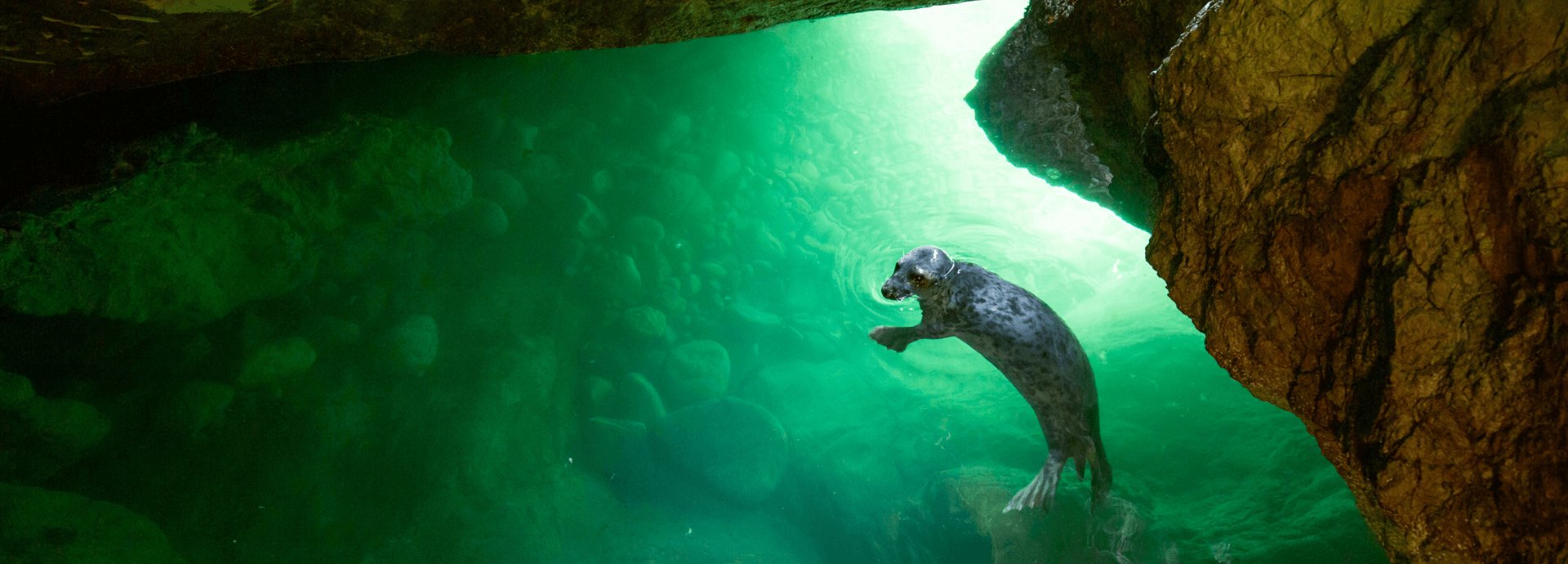
Submerged or partially submerged sea caves
Sea caves are formed where the specific geology of an area allows for the weathering and erosion of material to create overhangs, clefts, caves and tunnels that provide very specialised conditions for marine animals and plants.
The UK has the most varied and extensive sea caves on the Atlantic coast of Europe.
Within the SAC, sea caves are present around Pen Llŷn including the Tudwal Islands and also along the Merionnydd coast north of Tonfannau and the Ceredigion coast north of Clarach. A wide variety of cave types are present with differing morphology and exposed to varying degrees of wave action, tidal streams and scour from sand suspended in the water and stones/rocks on the cave floors. The geology of the SAC is complex and the variety of rock types and other geological features such as folding, fracturing and faulting and erosion have provided the basis for the formation and variety of sea caves within the site.
Sea cave communities range from scoured sparse communities characterised by lichens, red seaweed (such as the sand-binding seaweed Audouinella purpurea) and molluscs grazing on biotic films (e.g. at Porth Towyn, Trwyn Cilan, Black Rock, Rhoslefain, and Clarach) to a variety of communities that are rich in seaweed species, sponges, anthozoans (sea anemones and relatives) and ascidians (sea squirts) (e.g. at Porth Llanllawen NE of Bardsey Sound, Ogof Deuddrws at Aberdaron, and East St Tudwal’s Island).
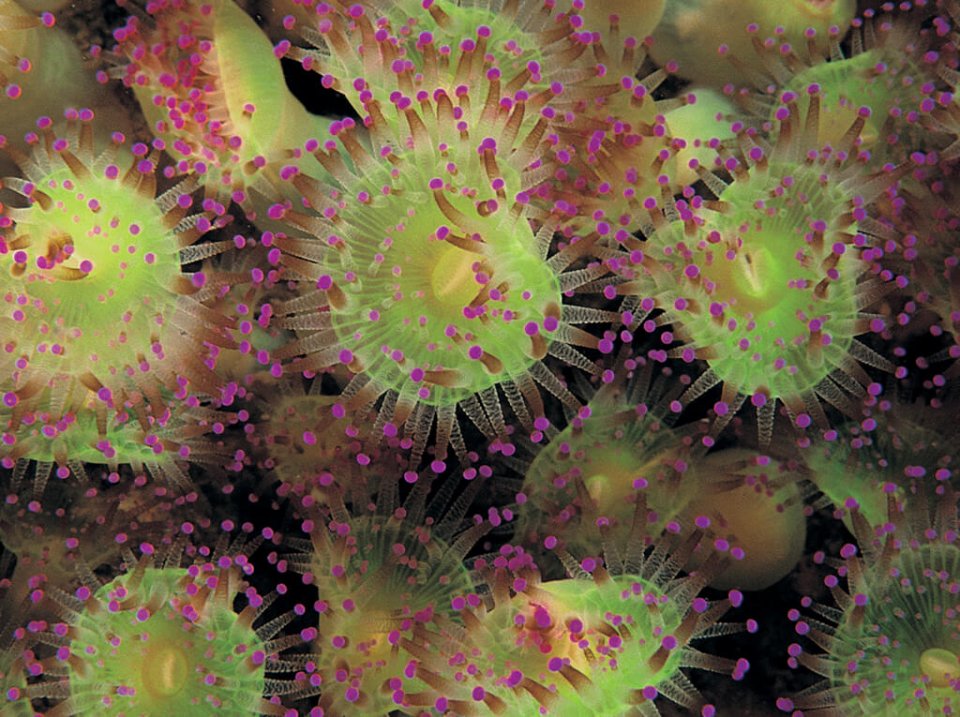
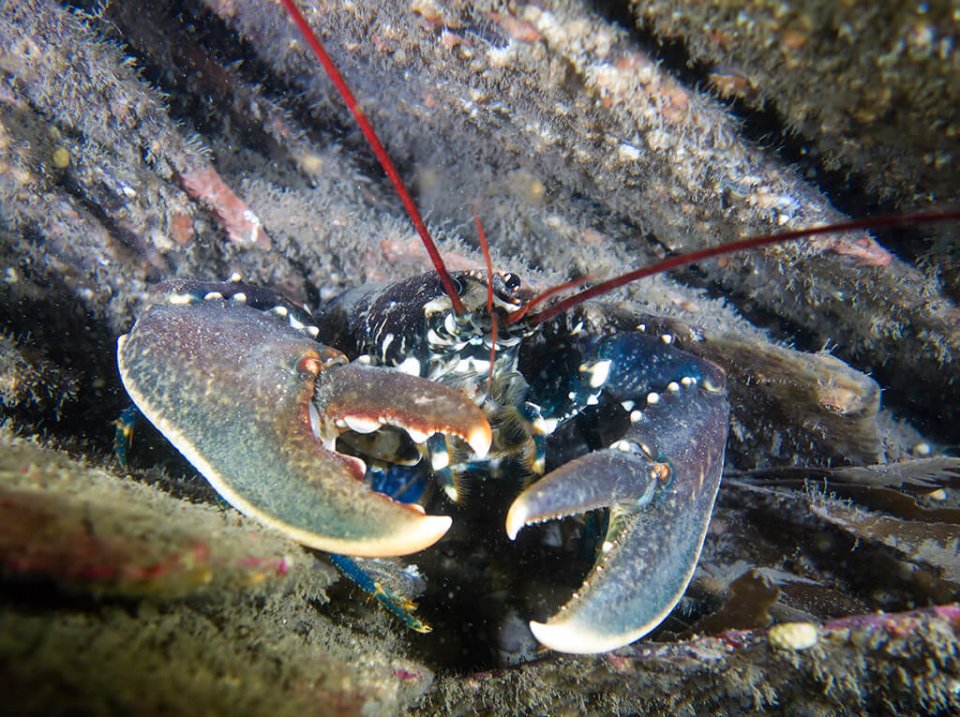
In caves with both intertidal and permanently submerged subtidal portions (e.g. St. Tudwal’s Islands) and those fully subtidal (e.g. tunnel at Pen-y-Cil), communities present include distinct local variations of tide-swept communities rich in sponges, hydroids and ascidians, scoured sparse communities of calcareous tubeworms and communities typical of surge gullies that experience strong and violent water surge.
The larger caves in the area (those surveyed near Hell’s Mouth, St Tudwal’s Islands and Pen y Cil) exhibit three-dimensional gradients - vertically from intertidal to subtidal, and horizontally from the sunlit entrances to shaded and permanently dark rears. Gradients of scour, water movement and rock type also influence the layout of different wildlife communities inside the caves. With this rich variety of sub-habitats and communities these caves also tend to be those with greatest species richness. Species vary from ephemeral and robust colonisers such as calcareous tubeworms to dense turfs of filter feeding sea squirts and hydroids and long-lived sponges and cup corals.
The sea caves of the SAC are also home to a number of species that are considered to be rare, scarce in a UK context or are present in unusually high abundance. These include 3 sponge species (Stelletta grubii, Stryphnus ponderosus, Thymosia guernei), an anemone (Epizoanthus couchii), a cup coral (Caryophyllia inornata), a mollusc (Otina ovata), a sea squirt (Polysyncraton lacazei) and a red seaweed (Schmitzia hiscockiana).
The shingle and rock ‘beaches’ that form at the back of some of the sea caves are important as seal haul-out and pupping areas in this SAC.