
Reefs
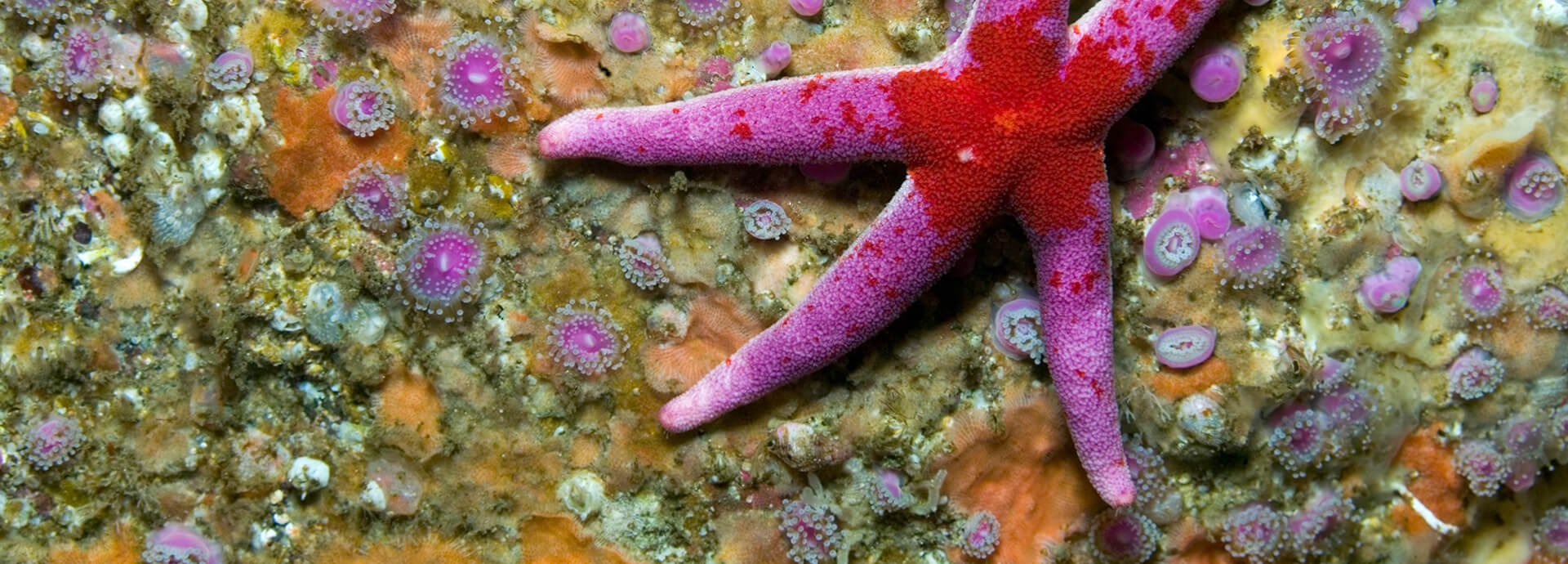
The reefs of Pen Llŷn a’r Sarnau are extremely varied and support a very wide variety of communities of marine animals and plants reflecting the broad range of physiographic factors around the site as wave action, tidal streams, variation in sea bed type, scour regimes, water clarity and variation in water depth.
The term reef can be applied to many different structures that include reefs formed of rocks and stones to biogenic reefs that are formed from living creatures. Each type of reef supports a different community of animals.
The following types of reef are present in the SAC:
- Rocky intertidal reefs
- Rocky subtidal reefs around the Llŷn Peninsula (bedrock, cobbles, mixed)
- Extensive boulder and cobble subtidal reefs - the sarnau
- Biogenic reefs
- Horse mussel reef
- Musculus mussel reef
- Honeycomb worm reef
- Carbonate reef formed by methane gas leaking from the seabed
Rocky intertidal reefs
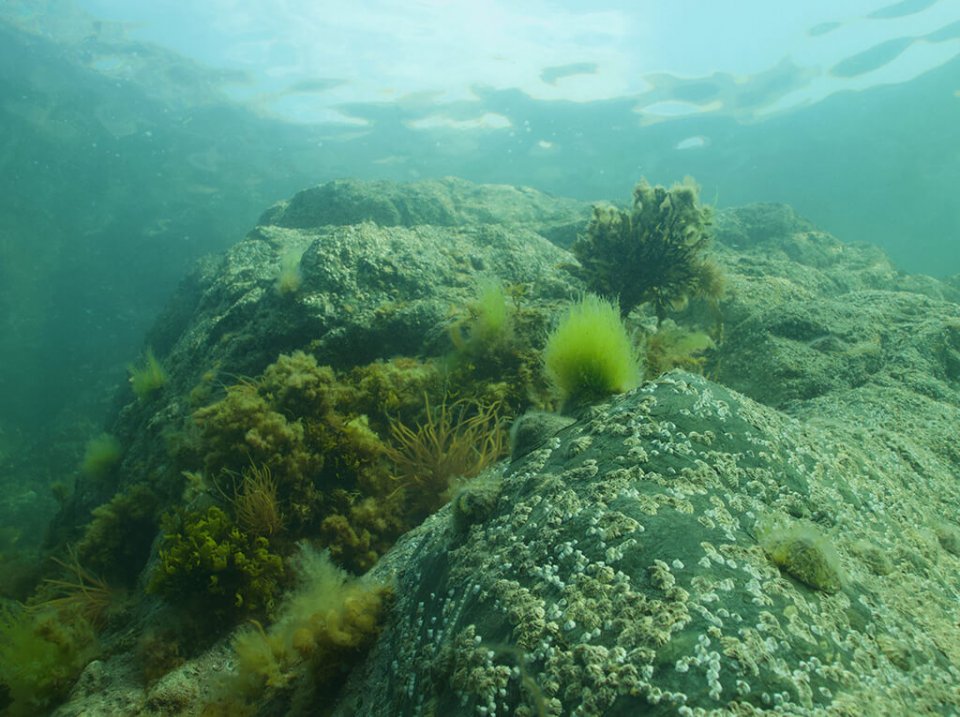
Rocky intertidal reefs are present around much of the shore of the SAC. Most of the intertidal reef in the site is comprised of either steep bedrock faces or boulders.
The intertidal reef communities include lichen-dominated communities at the top of the shore and various seaweed-dominated communities in the upper, middle and lower parts of the intertidal. Specialised communities have developed in rock pools, under boulders and also in rocky gullies that are exposed to strong water movement (surge gullies), there are also species rich examples of nationally important kelp and brown seaweed-dominated communities in lower shore areas exposed to strong tidal currents.
Rocky subtidal reefs around the Llŷn Peninsula
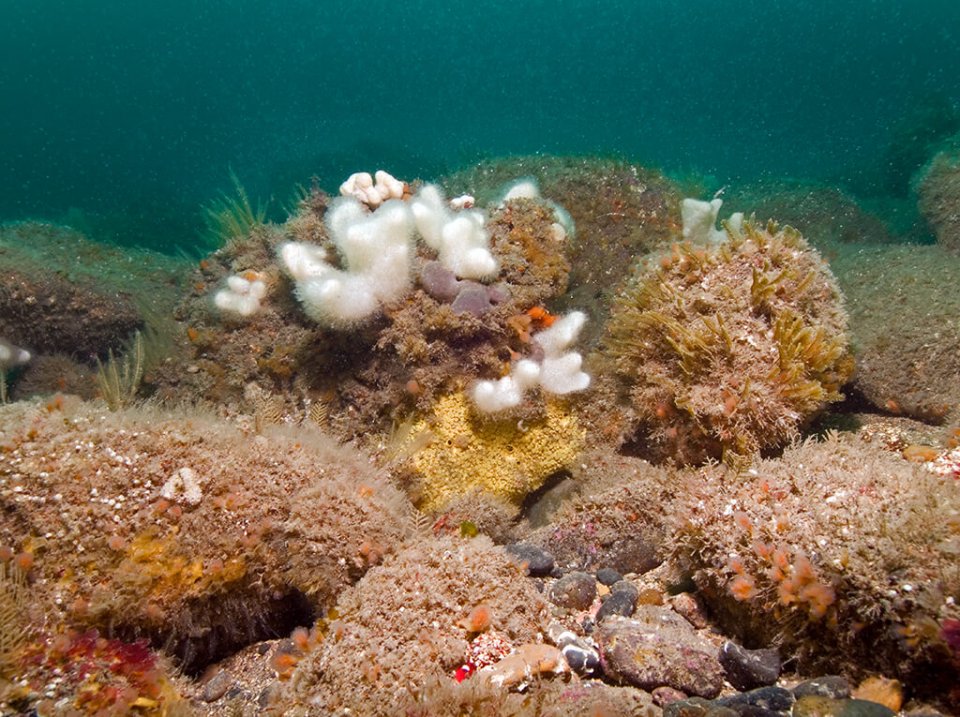
The submerged rocky reefs can be found around most of Llŷn Peninsula and can extend to more than 1km offshore. The different levels of exposure to wave action and tidal currents around the peninsula provide varied conditions for reef communities to develop. In general, the shallow water reefs around the Llŷn peninsula and Bardsey Island are dominated by dense growths of various kelp communities with an extensive and luxuriant turf of red seaweed species growing amongst and below the kelp. On the south side of the peninsula where there are boulder and cobble reefs surrounded by sediment, different communities develop with sugar kelp and other brown seaweeds being more common amongst a varied turf of red seaweeds and invertebrate animal species. As you get deeper and plants are no longer able to survive animal communities begin to dominate. They are made up of a wide variety of different species such as sponges, soft corals, sea anemones, sea firs (hydroids), sea mats (bryozoans) and sea squirts and associated mobile species.
Extensive rocky boulder and cobble subtidal reefs – the Sarnau
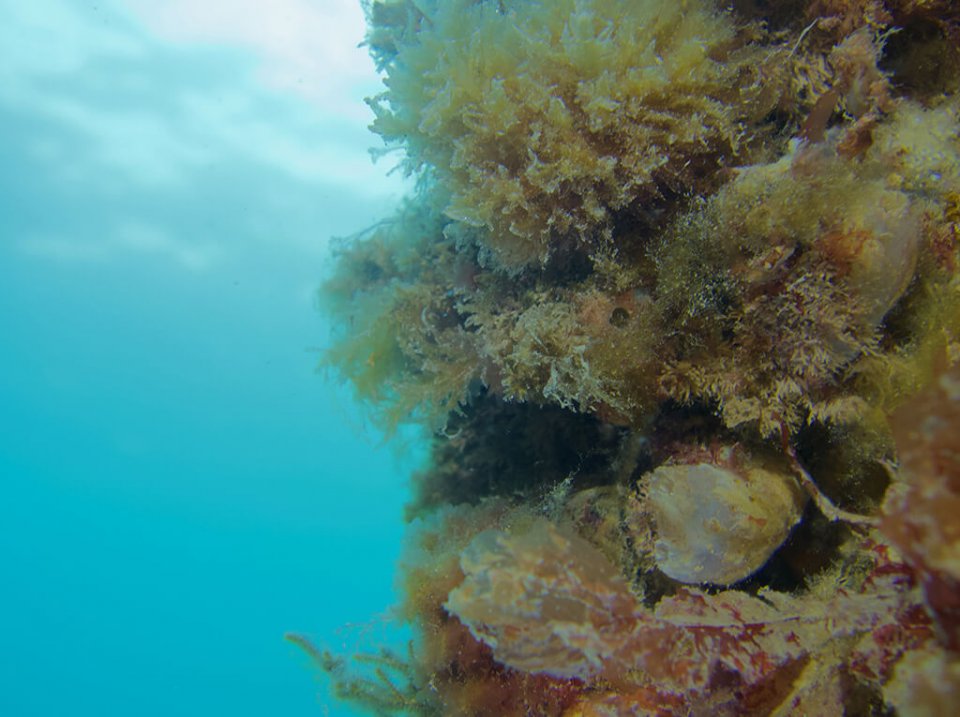
Sarn Badrig, Sarn-y-Bwch and Cynfelyn Patches are the three reefs that are called the Sarnau reefs. They are glacial moraines (extensive ridges of rock moved and built up by the action of glaciers during the last glaciation) and are composed entirely of boulders, cobbles, and pebbles mixed with various grades of sediment. They are unique structures that extend out into the sea for many kilometres. The reefs are surrounded by sediment plains on all sides and are exposed to tidal currents and wave action so, in addition to the ability to withstand the mobile nature of the reef substrate, the reef communities are characterised by a large number of species resistant to scour and sand cover.
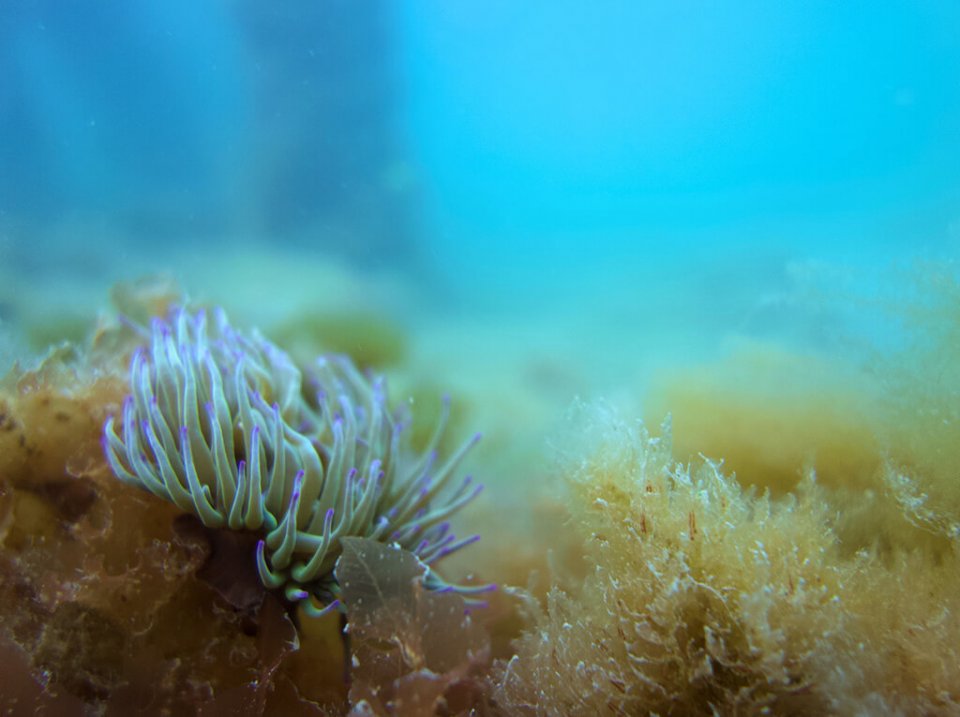
The reefs are mostly in shallow water (less than 10m deep) although they extend into deeper water at their south-westerly extremities. As with the reefs around the Llŷn Peninsula, these shallow rocky reefs are dominated by seaweeds. However, the disturbed nature of the reef substrate is such that kelp communities are not able to become established; instead, seaweed communities dominated by species able to withstand the mobile and scoured conditions develop and thrive forming dense seaweed beds across the reefs. Bootlace weed (Chorda filum), sugar kelp (Laminaria saccharina) and red seaweeds flourish on or near the reef crest and there are extensive forests of pod weed (Halidrys siliquosa) together with a species rich assemblage of other seaweeds on other parts of the reefs. Animal-dominated communities are found in the deeper parts of the reefs, including crustaceans, cnidarians, sponges, hydroids and encrusting bryozoans.
Biogenic reefs
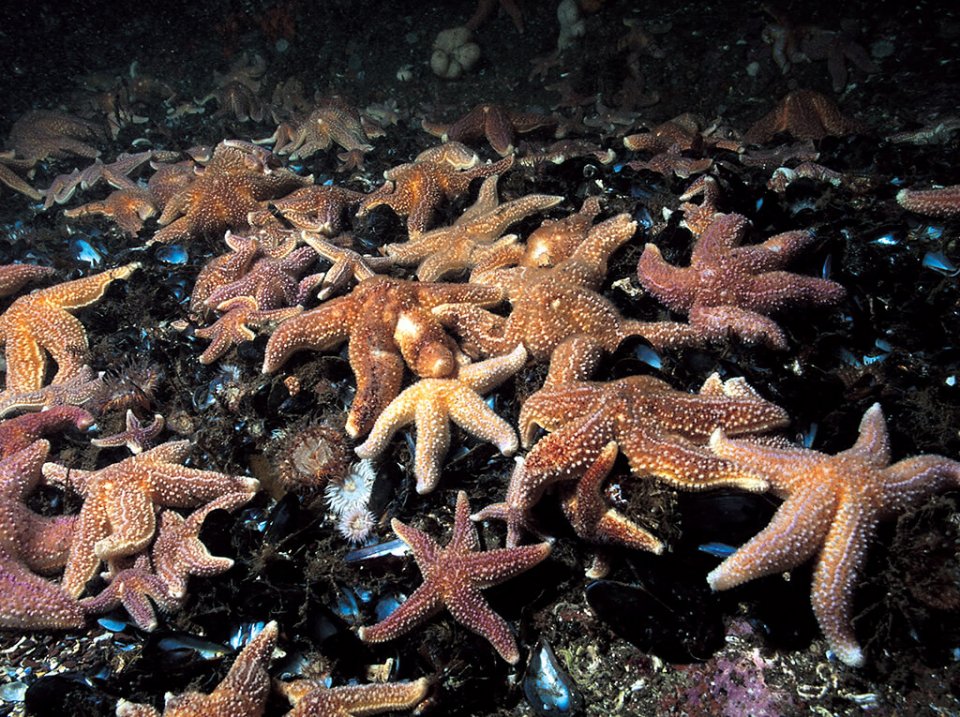
Horse mussel reef – Pen Llŷn a’r Sarnau SAC supports one of only two remaining horse mussel reefs in the Irish Sea (a third, damaged reef also exists in Northern Ireland). The horse mussel reef in the SAC is approximately 4 km offshore from the north Llŷn coast. Here the mixed sediment and cobble seabed has been covered by a dense bed of horse mussels Modiolus modiolus. The reef is at least 150 years old but is likely to be much older. Horse mussels are long-lived animals. Samples from the north Llyn horse mussel reef have shown that individual mussels are over 50 years old but with also juvenile mussels appearing to be recruiting onto the reef.
The mussels attach together by special (byssus) threads and these trap fine silt and the waste ‘sediment’ material produced by the mussels (pseudofaeces) and so build up the reef structure. The mussel reef comprises undulating waves on the seabed created by the mussels themselves – the bulk of the live mussels living on the crests of each wave and the troughs comprising empty shells.
The combination of substrata in the form of the hard mussel shells, various grades of sediment and the opportunities for cryptic species to find shelter amongst the mussels provides a broad range of sub-habitats - this supports a high biomass of a wide variety of species living in amongst the matrix of the mussel bed (infauna) and on the surface of the mussel reef (epifauna). Soft coral, molluscs, echinoderms, sea anemones, crustaceans and fish are some of the more conspicuous and larger species associated with the horse mussel reef. Biogenic reefs of this kind are thought to be highly productive and likely to play an important role in the marine ecosystem.
Musculus mussel reef - Musculus discors is a very small mussel species that occasionally lives in dense aggregations attached to rock and gravely sediments where it consolidates the sediment surface by binding it and a thick layer of pseudofaeces together with its byssus threads. Musculus discors is a common species but there are very few examples of dense beds of this species in the British Isles and most of the records to date are from the reefs off the north coast of the Llŷn Peninsula. Several large patches (perhaps hundreds of metres long) of Musculus bed are found encrusting the bedrock and boulder reefs along the north coast of the Llŷn Peninsula off Porth Ysgadan and Porth Colmon.
Honeycomb worm reef - The worm Sabellaria alveolata forms and lives in tubes made of sand grains. Under certain conditions the worm forms clusters of these tubes to form reefs that look like a giant honeycomb attached to rock. Honeycomb worm, or Sabellaria reefs in the SAC have high associated species richness; this is due to the fact that the reef structures stabilise and often forms rock pools in what would otherwise be more mobile and free draining shores. Wales has a large proportion of the UK’s honeycomb worm reef resource with a significant amount of this in the Pen Llŷn a’r Sarnau SAC.
Carbonate reef structure formed by methane gas leaking from the seabed
An extremely unusual reef structure has been recently discovered in the shallow waters (less than 10m deep) to the northwest from Barmouth. The reef structure that was identified is known as ‘Holden’s Reef’ – it is composed of a particular type of calcium carbonate formed by methane gas leaking from the seabed. This, and the associated reefs are the first known example of this habitat in UK inshore waters.
These reefs are comparable to the ‘bubbling reefs’ in the Danish Kaggegat and they would almost certainly qualify as an additional Annex I habitat under the Habitats Directive - Submarine structures made by leaking gases - but in the meantime they will be addressed as part of the reef feature of the SAC.
These carbonate reefs support an interesting assemblage of species. The varied topography of the substrate and the soft nature of the rock provide many sub-habitats and crevices and holes for species to inhabit - the reef structure has been heavily pitted and bored by bivalve molluscs and sponges and provides refuges for a large number of cryptic animals including anthozoans (anemones, soft corals and related animals), crustaceans, molluscs and fish. These assemblages of species are different to those found on other rocky substrata nearby. There also appears to be an abundant assemblage of mobile species associated with the reef.